A visual tool for mapping business models
See the structure
behind any
business.
Origin
From the authors
of Business Model
2.0 / 3.0 Zukan.
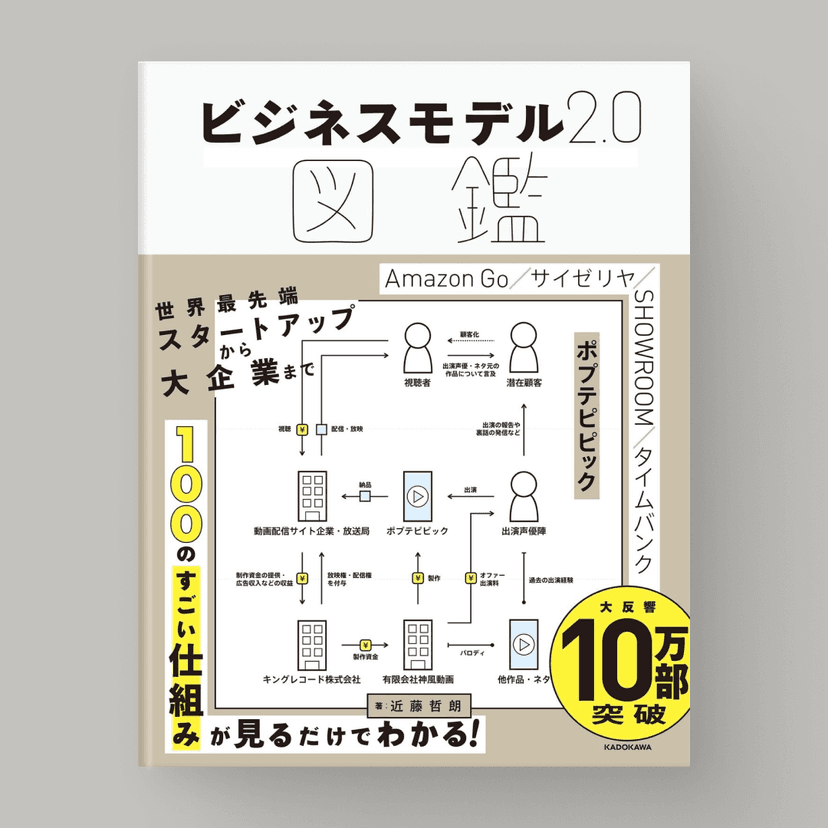
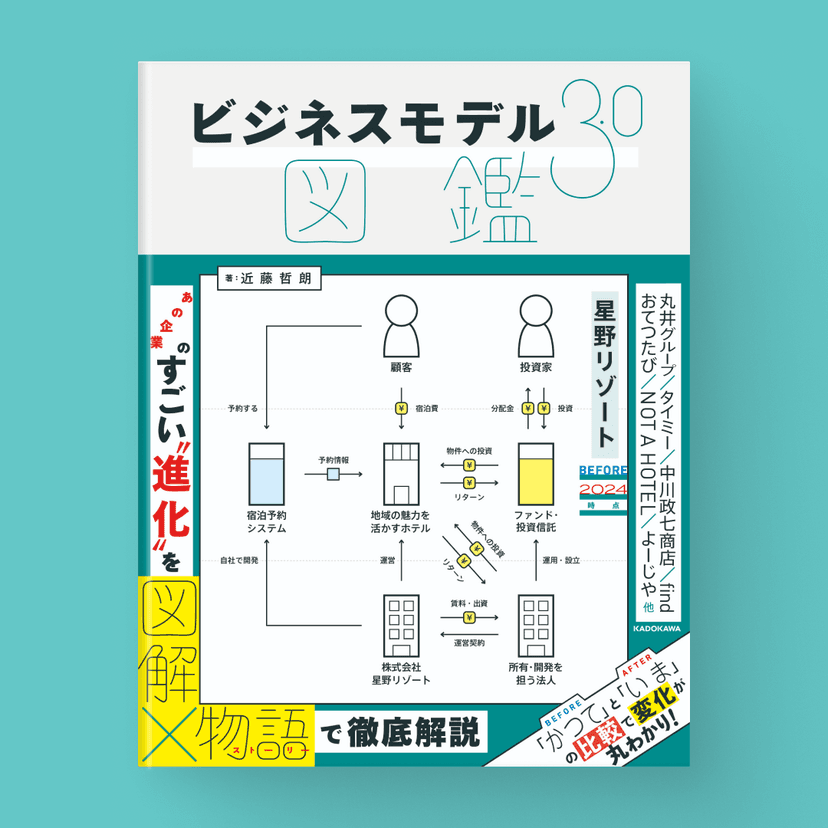
Bizgram was created by ZUKAI SOKEN, the team behind the Japanese books “Business Model 2.0 Zukan” and “Business Model 3.0 Zukan.” We turned the method from those books, mapping an entire business on a single page, into a tool anyone can use.
Bizgram is a registered trademark of ZUKAI SOKEN, K.K. in Japan.
Why
Everyone describes
a business differently.
Explained in words
“Mercari is a marketplace where individuals buy and sell used items. A seller lists an item in the app, and when a buyer purchases it, Mercari handles the payment, pays the seller the price minus a fee, and the item is shipped from the seller to the buyer...”
→ It's explained differently every time, and the relationships stay hidden.
Drawn with Bizgram
→ The players and how they connect are clear at a glance. Everyone works from the same picture.
Structure
Just three
rules.
Place them on a 9-cell grid
The grid has three rows: users, the business, and providers. Users go on top, providers at the bottom, and the business itself in the middle. A player's row shows its role.
Connect them with five kinds of arrows
How
Start drawing
in three steps.
Place the players on the vertical axis
Top: who it's for (users). Middle: what it is (the business). Bottom: who runs it (providers). Fill in this column first and you have the skeleton.
Connect them with arrows
Draw the flows between players. There are five kinds: goods, money, information, actions, and “part of.” Each has its own color and shape.
Show it to others
Send a link, and the recipient can view the diagram without logging in. It won't show up in search or listings. To draw together, invite them to a workspace.
Scenes
On your own
or as a team.
On your own
- Clarify a new business idea before building the pitch deck
- Analyze another company's business to see how it works
- Explain to clients how your service makes money
- Study business models as a student or researcher
As a team
- Gather your businesses in a workspace and see where each one stands
- Summarize a division's strategy on one page
Team
Bring your businesses
into one workspace.
A company, a division, a study group: you decide what a workspace covers. Because Bizgram uses only 9 cells and arrows, every diagram reads the same way, no matter who drew it.
Group them your way
A company, a division, a project, a study group. Create a workspace and add your businesses to it.
Compare side by side
See all your businesses in one list. Filter by status or tag, and sort them. They all use the same 9 cells, so you can compare them directly.
Invite members and viewers
Members can edit with you. Viewers can see diagrams but not change them, and you can invite as many viewers as you like for free.
For workshops, internal idea contests, and other time-limited programs, there's the Team license: a one-time purchase that lets any number of people edit together for a set period.
Gallery
Learn from 161 examples.
Explore the examples from the books “Business Model 2.0/3.0 Zukan,” drawn as Bizgrams, and see how well-known services are put together. The diagrams are in Japanese.
Pricing
Simple pricing.
Creating, editing, and sharing by link are free. There are just two paid options: the Pro plan for heavy solo use, and the Team license for editing with others. Viewers are always free, no matter how many.See full pricing
FAQ
FAQ
Can I use it for free?+
Creating an account, and creating, editing, saving, and sharing businesses by link, are all free (the people you share with don't need to log in). There are just two paid options: the Pro plan (monthly) for heavy solo use, and the Team license (one-time purchase, no auto-renewal) for editing together. Viewers are always free on either.
How is it different from other frameworks such as the Business Model Canvas?+
The BMC is a list format: you fill in nine boxes. Bizgram centers on the relationships between players, drawn as arrows, so you can see what flows from whom to whom and follow the money and goods.